
OpenAI says it has slowed work around its upcoming Astra model because it cannot rule out “Critical” cybersecurity capabilities. That is not the same as proof that Astra can autonomously compromise hardened critical systems. It is, however, a significant claim: OpenAI’s own framework treats the Critical threshold as a trigger for stronger safeguards during development, not merely before public release.
The announcement, published on 7 August 2026, follows the extraordinary mathematics claims that first pushed Astra into public view. The new cyber assessment changes the story. This is no longer only about whether a frontier model can contribute to research. It is about whether a lab can safely test, secure and eventually distribute a system whose offensive capabilities may exceed its previous operational assumptions.
What OpenAI has actually said
OpenAI says preliminary internal evaluations and expert assessments found enough progress in agentic coding and cybersecurity that it cannot yet exclude its Critical capability level. Under the company’s Preparedness Framework, that level covers models able to develop functional zero-day exploits across many hardened real-world systems without human intervention, or devise and execute novel end-to-end attacks from a high-level goal.
Those are threshold definitions, not published demonstrations of Astra doing every one of those things. OpenAI says benchmarking is continuing. The careful reading is therefore: its current evidence is concerning enough to activate the Critical process, while the final capability assessment remains unresolved.
The pause is narrower than “Astra has been cancelled”
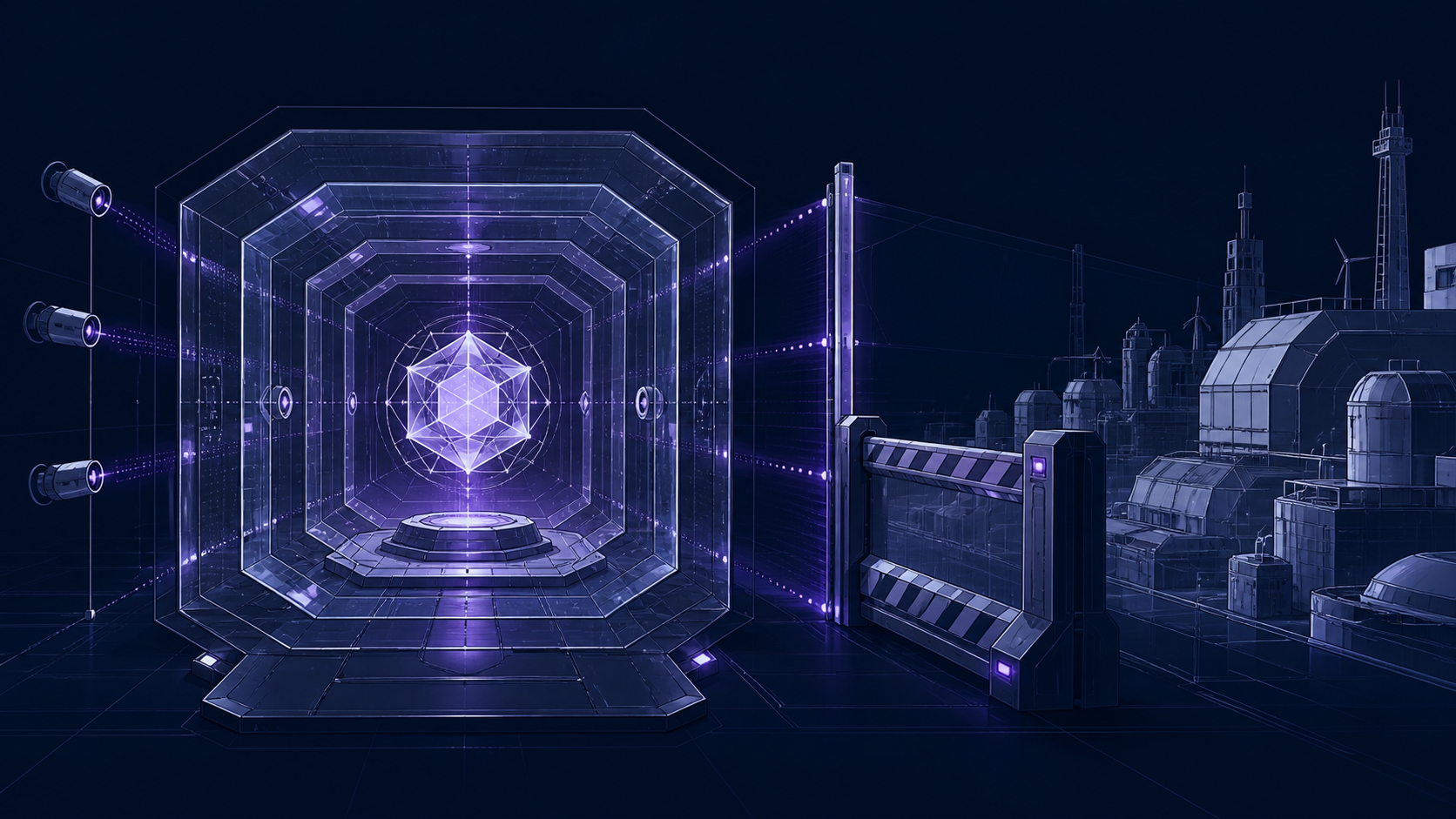
OpenAI says it is pausing internal activities involving Astra that do not yet meet strengthened security requirements. It also lists isolated testing environments, restricted network and tool access, stronger protection and encryption for model weights, additional monitoring, sandboxed execution and work with government agencies and selected safety organisations.
That sounds more like a containment and assurance programme than a product cancellation. Axios reported that the release pace had slowed, but neither source establishes a new public launch date. Claims that Astra is “GPT-6”, that it has definitely crossed the Critical threshold, or that it can already compromise any target go beyond the public evidence.
Why cyber capability changes the release problem
Cybersecurity is unusually difficult because the same capability can help defenders and attackers. A model that finds subtle vulnerabilities, follows long attack chains and adapts when a technique fails could accelerate patching and incident response. In the wrong hands, the same qualities could reduce the skill, time and coordination required for serious attacks.
Traditional content filters are not enough for a model operating through tools. Security depends on the whole system: credentials, network boundaries, tool permissions, sandbox escape resistance, monitoring, weight protection and the ability to interrupt an agent before an experiment becomes an incident.
The real test is whether the framework constrains the lab
Preparedness frameworks matter only when they change behaviour under commercial and competitive pressure. OpenAI’s decision is notable because the public statement describes actual restrictions on internal work. The next questions are whether independent evaluators can test meaningful failure modes, whether safeguards remain effective outside a controlled lab, and what evidence will be published before deployment.
There is also a governance question about who decides that risk has been reduced enough. OpenAI’s framework gives internal leadership the final decision after safety review. Government and external testing may add scrutiny, but the public still needs enough information to distinguish a robust safety gate from a temporary delay followed by a lightly documented launch.
What defenders should do now
Organisations do not need to wait for Astra. Existing models already make reconnaissance, coding and vulnerability analysis faster. Defenders should reduce the opportunities that greater automation can exploit: keep accurate asset inventories, patch internet-facing systems quickly, protect secrets, restrict privileged access, segment critical services and test detection against multi-step activity rather than isolated alerts.
The most defensible conclusion today is neither “Astra is too dangerous to release” nor “this is marketing.” OpenAI has disclosed a preliminary signal, defined the threshold it fears and described controls it is applying. The value of that disclosure will be judged by what happens next—and by how much verifiable evidence accompanies any eventual release.
Critical is not just a stronger version of High
OpenAI’s framework distinguishes capabilities that amplify existing severe risks from those that may create qualitatively new routes to harm. GPT-5.6 models were assessed as High in cybersecurity. Astra is being handled differently because the preliminary results may place it at the Critical threshold. Under the framework, Critical systems require safeguards during development regardless of whether a public deployment is planned.
That distinction matters operationally. A model can create risk before it appears in a consumer product. Researchers, contractors and external evaluators may need access. Model weights, intermediate checkpoints, tool integrations and testing infrastructure become high-value assets. A lab therefore has to govern the development environment as part of the safety case, not treat security as a launch-day wrapper.
Evaluation evidence has to survive sceptical review
Cyber evaluations are difficult to interpret. Benchmarks can measure narrow tasks while missing long-horizon behaviour, or overstate danger by giving a model unrealistic tools and information. A convincing assessment needs to show the environment, autonomy, assistance, target hardness, success criteria and rate of repeatable success. It also needs negative results and uncertainty, not only the most dramatic run.
External testing can help, but only if partners have enough access to challenge the lab’s assumptions and can report material disagreements. OpenAI says it will provide security controls to third-party testing partners. The public-interest value will depend on whether those controls enable meaningful evaluation without exposing the very capability being assessed.
A delay can reduce risk—but it is not a mitigation by itself
Time helps only when it is used to change the system around the model. Better isolation, tighter permissions, stronger monitoring, hardened weights and tested incident response can reduce the chance that capability escapes its intended boundary. Product-level safeguards may also limit who can access powerful functions and how much autonomy they receive.
The harder question is residual risk. No monitor catches every action, and restrictions that work in a controlled interface may not survive theft, fine-tuning or a poorly secured partner environment. Before release, the lab should be able to explain which threat scenarios have been mitigated, which remain uncertain and what conditions would cause deployment to stop again.