
Most people think a potential SpaceX IPO is about rockets.
Investors see launch vehicles.
Space enthusiasts see Mars.
The media sees another Elon Musk headline.
But they may all be looking in the wrong direction.
If SpaceX eventually goes public, the most significant impact may not be on space exploration at all.
It may be on artificial intelligence.
AI Has A Dirty Secret
The popular image of AI is a chatbot.
Ask a question.
Receive an answer.
Magic happens somewhere in the cloud.
The reality is far less glamorous.
AI runs on infrastructure.
Vast quantities of infrastructure.
Datacentres consume enormous amounts of electricity. Training advanced AI models requires thousands of specialised chips operating around the clock. Those chips require cooling, networking, power generation and global connectivity.
The AI race is not really about intelligence.
It is about who can build and operate the infrastructure that intelligence requires.
That is where SpaceX becomes interesting.
SpaceX Is Not Really A Rocket Company
This is where many people misunderstand the business.
Rockets are impressive.
Rockets attract headlines.
Rockets are not necessarily the most valuable part of the company.
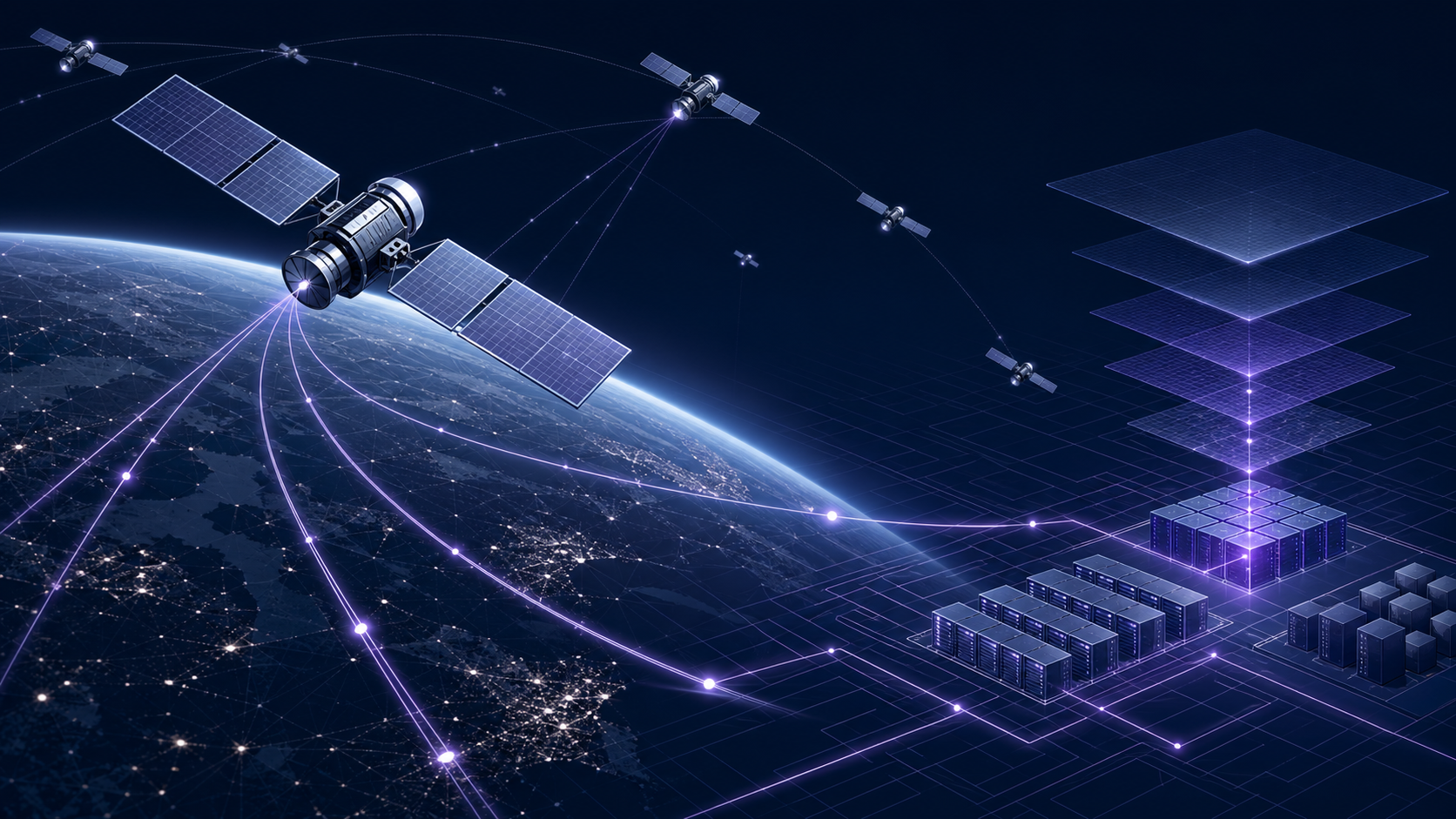
The real jewel may be Starlink.
While competitors continue laying fibre and building traditional telecommunications networks, SpaceX has quietly deployed thousands of satellites into orbit.
The result is one of the largest communications networks on Earth.
Or more accurately, above Earth.
Every satellite launched strengthens a growing global data infrastructure that reaches places conventional networks cannot.
At first glance, this appears unrelated to AI.
It isn’t.
AI Needs To Be Everywhere
Today’s AI largely lives inside cloud platforms and datacentres.
Tomorrow’s AI will increasingly live at the edge.
Factories.
Ships.
Aircraft.
Remote industrial sites.
Agriculture.
Military operations.
Disaster zones.
Oil platforms.
Rural communities.
Many of these environments have one thing in common.
Poor connectivity.
AI becomes dramatically more useful when it can access current information, communicate with central systems and coordinate with other agents.
Reliable global connectivity is therefore not simply a telecommunications problem.
It is an AI problem.
Starlink may become one of the key pieces of infrastructure that allows AI systems to operate beyond major cities and corporate offices.
The Military Angle
This is the part that receives less public attention.
Modern military operations increasingly depend upon data.
Drones.
Sensors.
Communications.
Autonomous systems.
Real-time intelligence.
Many defence analysts believe future conflicts will be heavily influenced by AI-assisted decision making.
None of that works without resilient communications.
Recent conflicts have already demonstrated the strategic importance of satellite communications networks.
As AI becomes more integrated into defence systems, the value of globally available communications infrastructure only increases.
A future where AI and autonomous systems operate across land, sea, air and space depends upon one thing before anything else.
The network.
The Infrastructure Arms Race
Investors often talk about the AI winners.
OpenAI.
Anthropic.
Google.
Microsoft.
Meta.
The assumption is that the biggest rewards will flow to the companies creating the smartest models.
History suggests otherwise.
During gold rushes, the largest fortunes are often made by those selling the tools.
AI requires:
* Power generation
* Networking
* Datacentres
* Semiconductors
* Communications infrastructure
SpaceX increasingly sits within that final category.
The company may eventually become as important to the movement of information as traditional telecommunications providers were during the internet boom.
That possibility becomes even more interesting if public markets gain access through an IPO.
The Risk Nobody Talks About
There is, however, a significant risk.
Investors may become distracted by the mythology.
Mars.
Elon Musk.
Rocket launches.
Science fiction.
The danger is that people buy a story they understand while missing the business they are actually purchasing.
The greatest long-term value of SpaceX may not come from spectacular launches.
It may come from becoming a foundational layer of global digital infrastructure.
The same way most people use the internet without thinking about fibre optic cables, future generations may use AI systems without ever considering the satellite networks connecting them.
Looking Beyond The Rocket
If SpaceX eventually launches an IPO, it will undoubtedly be one of the most anticipated public offerings in modern history.
Many investors will view it as a bet on space.
Others will view it as a bet on Elon Musk.
A smaller group may recognise something different.
A bet on infrastructure.
And in an age increasingly defined by artificial intelligence, infrastructure may prove more valuable than intelligence itself.
The next phase of the AI revolution will not be decided solely by the smartest algorithms.
It will be decided by who owns the roads they travel on.
Why a SpaceX IPO Could Be One of the Biggest AI Stories of the Decade
How we work: articles are source-led, AI-assisted and editorially reviewed. Read our editorial method.
Reader response
Questions, corrections or a story lead?
Send us a message with enough context to make it useful. Your note will reach the Artificially Confident editorial inbox.