Developing story: Facts and sources were last checked on 20 August 2026 at 19:35 BST.
Five United States agencies have warned that threat actors are actively using AI-assisted exploit development against Siemens S7 programmable logic controllers used in critical infrastructure. The advisory, released on 19 August by the NSA, CISA, FBI, Department of Energy and Environmental Protection Agency, says the activity is affecting sectors including manufacturing, energy, water and wastewater, chemicals, food and agriculture, and commercial facilities.
This is important because it moves a familiar AI-security concern into operational technology. The agencies are not describing a hypothetical model capability or a laboratory demonstration. They say attackers are using AI-generated scripts, public vulnerability information and open-source industrial automation libraries to accelerate reconnaissance and capability development against real, internet-exposed controllers.
What the agencies have established
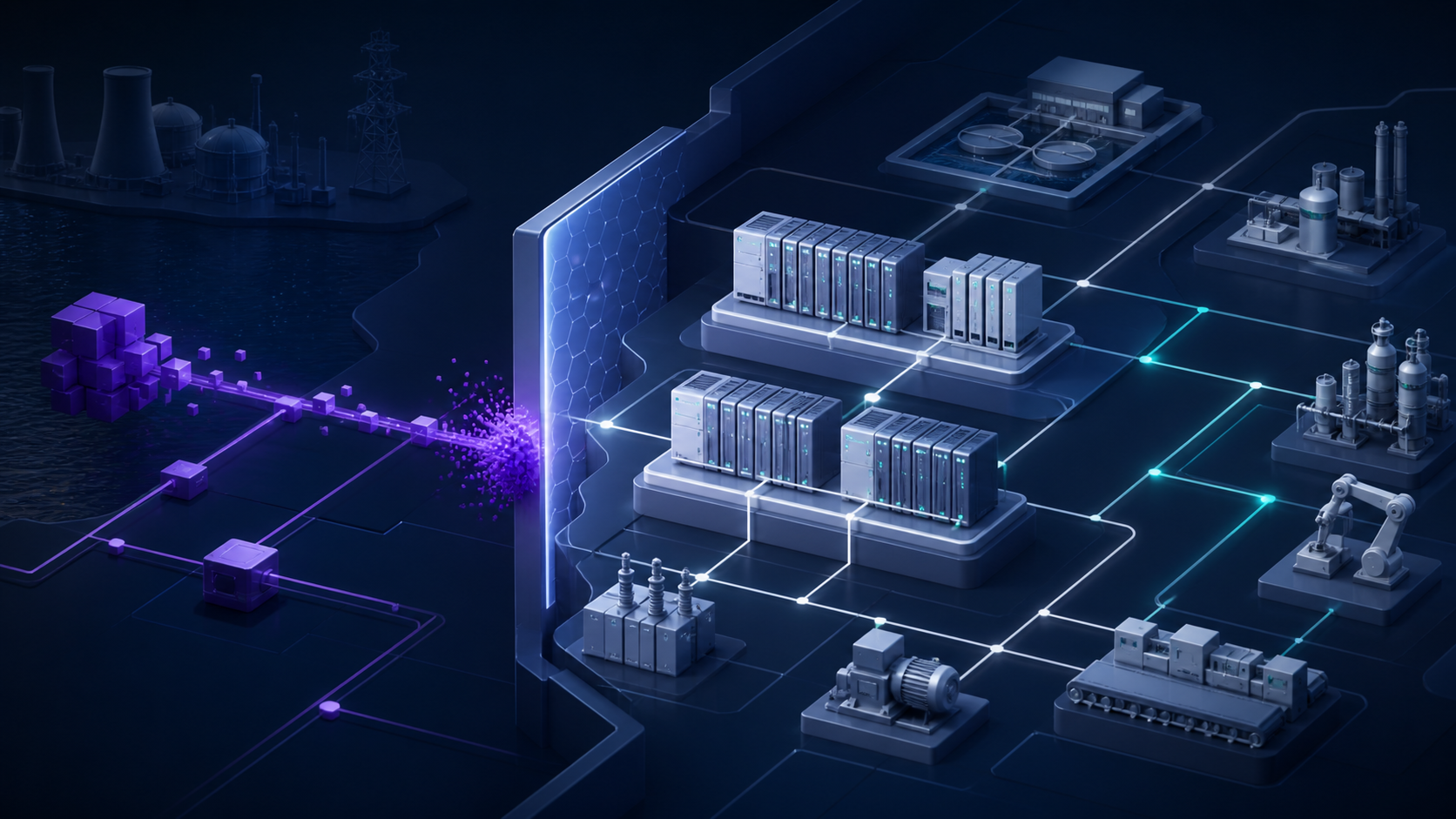
The joint federal advisory identifies active targeting of Siemens S7-200, S7-300, S7-400, S7-1200 and S7-1500 controllers, including safety variants. It says the actors are finding exposed or poorly segmented devices through internet-scanning services and using AI assistance to generate and refine exploitation scripts from publicly available information.
The scripts reportedly incorporate Snap7, an open-source library that communicates with Siemens controllers over the S7comm protocol. Malicious tools can be made to resemble legitimate operational-technology monitoring software while providing read and write access to controller memory, configuration data and ladder logic. The advisory says this activity can support initial access, credential access, denial of service and preparation for later operational effects.
The agencies assess that the observed pattern is likely intended to create persistent knowledge of targeted environments and improve the attackers’ ability to cause disruption later. They list potential consequences including interrupted industrial processes, safety incidents, equipment damage, loss of sensitive operational data and cascading effects across connected services.
That list describes possible impact, not evidence that every outcome has occurred. The public advisory does not attribute this specific campaign to a named state or criminal group. Reuters reported the warning and the wider concern about attacks on water infrastructure, while The Register reported that Iran-affiliated activity is suspected by external specialists. That suspicion should not be treated as formal attribution by the authoring agencies.
What the AI element changes
The underlying weaknesses are not new. Internet-facing controllers, default or weak credentials, outdated firmware and poor separation between corporate and operational networks have been dangerous for years. AI does not create those openings. It changes the cost and speed of acting on them.
The advisory says AI assistance can reduce the expertise and time needed to turn public vulnerability information into working industrial-control scripts. It can also help an attacker iterate more quickly, adapt tooling and disguise it as an ordinary monitoring utility. The practical risk is therefore not a magical autonomous cyber weapon. It is faster conversion of known exposure into usable attack capability.
That distinction matters. Organisations may be tempted to respond with another AI-detection product while leaving the actual route to a controller intact. The stronger response is more conventional: know which devices exist, remove direct internet access, segment operational networks, control engineering access, patch safely and monitor the protocol behaviours that should be rare or impossible.
The operational consequence
Owners and operators should treat an internet-reachable PLC as an immediate control failure, not a future improvement task. The federal advice calls for an inventory of Siemens controllers, confirmation of firmware and security status, inspection of remote-access arrangements, and verification that S7comm traffic on TCP port 102 cannot cross an untrusted perimeter.
It also recommends hunting for connections from non-engineering workstations, unusual data-block access, write operations outside approved change windows, sequential scanning, repeated connection attempts and Snap7 use outside authorised systems. Third-party integrators deserve particular attention because asset owners may not realise that a supplier-created route exposes a controller.
Changes to live operational technology must still be controlled. A rushed firmware update, restart or firewall change can itself interrupt a physical process. The right sequence is to establish the asset and exposure, involve the accountable operational owner, test the change where possible, preserve controller logic and configuration, and document both the intervention and the residual risk.
This is the same assurance principle discussed in our analysis of AI-assisted coding and human review: the level of control must follow the consequence of failure. Code aimed at an industrial controller deserves the strongest end of that spectrum. It also extends the lesson from the OpenAI–Hugging Face incident. AI-enabled cyber capability is no longer only a question for model laboratories; it now changes the threat model for defenders operating essential services.
What remains unclear
The public record does not yet establish how many facilities have been compromised, which AI systems were used, whether generated scripts directly caused operational disruption, or who is responsible for the activity. It also does not show that AI discovered previously unknown flaws. The advisory instead describes AI being used to assemble and refine exploitation techniques around public information, known vulnerabilities and exposed systems.
Siemens’ standing security bulletin advises operators to keep industrial systems current and apply defence in depth. In a statement reported by Reuters on 20 August, the company said it had not detected an increase in attacks against its industrial controllers or a previously unknown vulnerability. Siemens said the federal warning concerns new methods for exploiting possible misconfigurations already described in its guidance. That is an important boundary: an active targeting campaign does not necessarily mean a new product flaw or a measured rise in successful compromise.
What to watch next
The next useful evidence will be technical indicators, confirmed victim impact, formal attribution and clarification of whether attackers progressed from reconnaissance or read access to unauthorised changes in live processes. Updates from CISA and Siemens matter more than speculation about which model wrote which script.
For now, the governance lesson is plain. AI has lowered the friction around a class of attack that was already possible. Critical-infrastructure operators do not need to wait for a more dramatic incident before acting. They need evidence that every controller is known, appropriately isolated, monitored and governed through a safe change process. The urgent part of this story is not that AI can write code. It is that exposed physical systems give that code somewhere consequential to go.
Sources
- CISA, NSA, FBI, DOE and EPA: Defending Against an Active Threat to Siemens S7 Series PLCs
- Siemens ProductCERT: Increasing Cyber Threats to Industrial Control Systems
- Reuters: US warns Siemens devices can be hacked amid fears Iran is breaching water plants
- Reuters: Siemens says it has not seen an increase in attacks or an unknown vulnerability
- The Register: attackers use AI-made code against critical-infrastructure controllers